
Digestive health is an important part of overall wellness, but many people do not pay attention to their gut until they start experiencing problems. Frequent bloating, gas, irregular bowel movements, stomach discomfort, and changes in digestion can make everyday activities uncomfortable. These problems can also affect eating habits, sleep, confidence, and general quality of life.
In the United States, interest in gut health supplements has grown as more people look for convenient ways to support digestion and maintain a healthy gut microbiome. Among the products receiving attention is Belly Balance, a dietary supplement marketed for digestive wellness.
But an important question remains: Does Belly Balance really work for gut health, or is it another supplement with attractive marketing claims?
In this detailed Belly Balance review, we will examine the product’s reported ingredients, potential digestive benefits, scientific research, possible limitations, safety considerations, and factors consumers should understand before purchasing it.
We will also discuss whether Belly Balance is worth considering for someone experiencing occasional digestive discomfort.
It is important to understand that a supplement’s ingredients and a finished product are not the same thing. Research on an individual probiotic or prebiotic ingredient does not automatically prove that a particular supplement produces the same results.
Our goal is to provide a balanced and easy-to-understand overview so readers can make an informed decision.
What Is the Belly Balance Supplement?
The Belly Balance supplement is sold as a daily digestive support capsule. Product pages describe Belly Balance as a formula for adults who deal with occasional bloating, irregular digestion or general stomach discomfort. The idea is to pair probiotic strains with a natural prebiotic fibre, so the gut gets both helpful bacteria and something to feed them.
Review sites give slightly different numbers. One lists about 1050 mg of active material per serving, and another mentions more than one billion live cultures. Most pages suggest two capsules a day with water.
A few things are worth knowing right away:
- It is promoted mainly in Australia and New Zealand, with “AU” and “NZ” official sites.
- Many pages about it are promotional or affiliate posts, not independent testing.
- The same name is also used by at least one unrelated product, a honey-based herbal blend with chamomile, fennel, ginger and peppermint. Make sure you know which one you are looking at.

Belly Balance Ingredients: What Is Inside?
This is where things get messy. The ingredient list changes depending on which page you read. That alone is a good reason to check the label on the exact bottle you buy.
These are the ingredients that show up most often:
- Lactobacillus acidophilus: a widely used probiotic strain found in yogurt and supplements. It is linked with digestive comfort and healthy gut flora.
- Streptococcus salivarius: a bacterium usually discussed in connection with the mouth and throat. Some sales pages say it improves nutrient absorption, but that claim is not well proven in humans, so treat it as marketing.
- Inulin (prebiotic fibre): a plant fibre, often from chicory root, that feeds friendly bacteria.

Other pages list Lactobacillus plantarum, Lactobacillus paracasei, Bifidobacterium lactis, ginger, peppermint or fennel. Because the lists do not match, trust only the panel printed on the product you actually receive.
Why the Probiotic Plus Prebiotic Idea Makes Sense
Probiotics are live microbes. Prebiotics are fibres those microbes eat. Combining them is often called a “synbiotic” approach, and it is a legitimate concept in gut-health research. The theory is simple: add helpful bacteria, then feed them so they have a better chance of settling in.
What Science Says About Inulin
Inulin is probably the best-studied part of the formula. In a placebo-controlled trial, people with abdominal symptoms took 8 grams of chicory inulin daily for four weeks, and the inulin group showed more bifidobacteria than the placebo group. A University of Reading trial found that both 5 g and 8 g a day raised bifidobacteria in healthy adults.
Here is the catch. Those studies used several grams a day, and published work describes microbiome effects at doses from roughly 4 to 40 g daily. A capsule labelled 1050 mg is only about one gram in total, and that gram has to cover every ingredient. So the real inulin dose is likely far below what the trials used. That is my own reasoning from the label numbers, not a lab result, but it is a good reason to stay realistic.
Inulin can also backfire. In a study of people with irritable bowel syndrome (IBS), inulin produced the biggest rise in colon gas compared with the other fibres tested. So a “bloating” product that contains a fermentable fibre may, for some people, make bloating worse before it gets better.
How Belly Balance for Gut Health Is Supposed to Work
Based on the way the manufacturer-style pages explain it, the logic goes like this:
- The probiotic strains reach your intestines.
- Inulin feeds beneficial bacteria so they can grow.
- A more balanced gut microbiome may mean smoother digestion, less bloating and better regularity.
- Some marketing pages go further and claim better immunity, skin, mood and weight control.
Steps one to three are plausible for some people. Step four is where the claims run ahead of the evidence. Weight-loss promises especially are not backed by solid human studies for this product.
What Research Says About Probiotics in General
Probiotic research is real, but it is nuanced. The main lessons from major health bodies are:
- Effects are strain-specific. A benefit seen with one strain does not automatically apply to another.
- Results depend on the condition. Evidence is stronger for some uses, such as certain antibiotic-related diarrhoea, and weaker for others.
- Dose and survival matter. The bacteria need to be alive and in a high enough amount when you take them.
- Supplements are not drugs. In the US, they do not need FDA approval before they are sold.
For the original sources, see the NIH Office of Dietary Supplements probiotics fact sheet and the NCCIH page on probiotics. The American Gastroenterological Association has also published guidance on when probiotics are and are not recommended. Links are in the reference list below.
Belly Balance Reviews: What Are Customers Saying?
Online Belly Balance reviews are mostly positive, but read them with care.
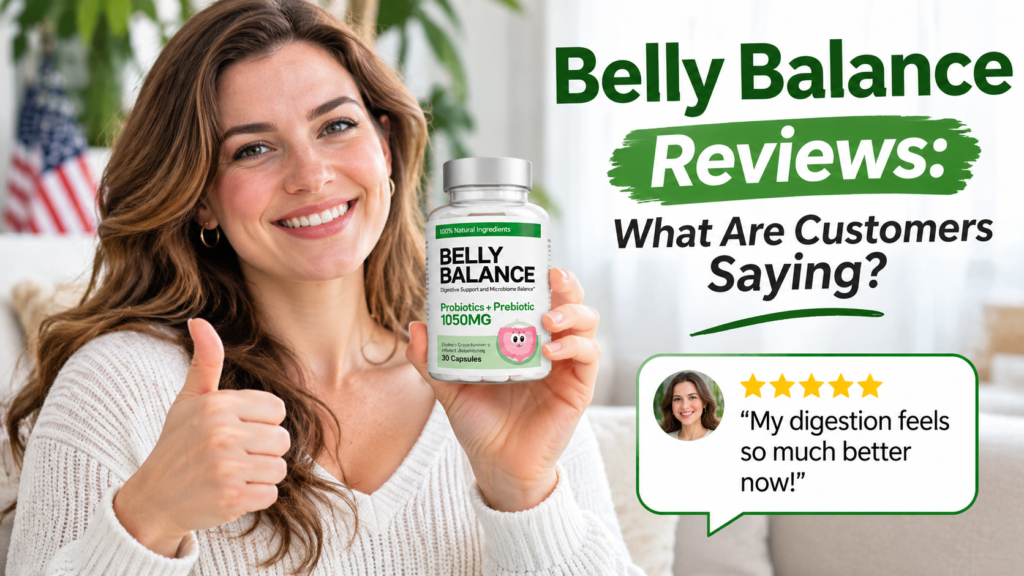
Common positive themes:
- Less bloating and a lighter feeling after meals
- More predictable bowel habits
- Easy-to-swallow capsules
- A reviewer who said that after adding it to their routine, their digestion felt more regular and comfortable through the day
Common mixed or negative themes:
- Mild nausea in the first few days
- Disappointment when stomach pain did not fully go away
- A New Zealand user who said it did not fix everything but gave them more good days
Now the cautions. Many pages that praise the product exist to sell it. Some use phrases such as “no side effects”, “limited stock” and “huge discount”. Those are red flags. No supplement is guaranteed to be free of side effects, and urgency tactics are a common sales trick. Independent lab or consumer testing would be a much better yardstick, and I could not find any for this brand.
Is it FDA approved?
No supplement is “FDA approved” the way a prescription drug is. One review page states plainly that the FDA has not evaluated the product because it is a dietary supplement. That is normal for the category, but it means you should not read marketing language as medical proof. The FDA’s dietary supplement page explains how the system works.
Case Study: A US User Testing a Gut Supplement
A U.S. consumer named Dana shares a positive experience while focusing on improving her digestive wellness. She starts paying closer attention to her daily eating habits, increases her fiber intake, drinks more water, and explores belly balance as a possible addition to her wellness routine. Over time, she becomes more aware of how different foods affect her digestion and makes healthier lifestyle choices to support her gut health. Her experience highlights the importance of consistency, balanced nutrition, and informed supplement choices. Note: Dana is a fictional illustrative example, not a verified customer testimonial or proof of Belly Balance’s effectiveness.
Meet Dana (illustrative): Dana is 42, works a desk job in Columbus, Ohio, and eats a typical American diet with plenty of coffee, takeout and not much fibre. She feels bloated most afternoons and has irregular bowel movements.
Step 1: Check the basics first. Before buying anything, Dana sees her primary care doctor to rule out red flags such as blood in stool, unexplained weight loss or persistent pain. Her doctor suggests more fibre, more water and daily walks and says a probiotic is reasonable to try.
Step 2: Check the seller. Because the product is mainly sold in Australia and New Zealand, Dana checks shipping costs, the return policy and whether the seller is legitimate. She avoids look-alike sites and unknown marketplace sellers.
Step 3: Track for four weeks. She uses a notes app to rate bloating from 0 to 10 and record stool pattern, energy and meals for two weeks before starting, then four weeks after.
Step 4: Judge fairly. She compares her averages. If bloating drops clearly and stays down, that is a good sign. If nothing changes, she stops. If symptoms get worse, she stops sooner and calls her doctor.
What US readers can learn from this example:
- A capsule alone rarely fixes a gut stressed by low fibre, poor sleep and irregular meals.
- A symptom diary is the cheapest way to see whether a supplement helps.
- Placebo effects are real, so measure changes instead of trusting a feeling.
- Involve a doctor if symptoms continue.

Belly Balance Pros and Cons
Pros
- Combines probiotics with a prebiotic fiber, a sensible idea
- Easy capsule format, simple daily routine
- Strains like L. acidophilus are widely used and studied in general
- Many users report feeling lighter and more regular
- Promo pages mention a money-back guarantee
- Usually mild side effects for healthy adults
- Fits into a broader healthy-gut routine
Cons
- No published clinical trial on the branded product that I could find
- Ingredient lists differ across websites
- The inulin amount is unclear and may be low
- Many glowing reviews are promotional or affiliate content
Comparison: Other Gut Health Options
| Option | What It Offers | Strengths | Limits |
|---|---|---|---|
| Belly Balance capsules | Probiotics plus inulin | Convenient, combines pre- and probiotics | Unclear dose, little product-specific proof |
| Typical store probiotic | Live bacteria, often with named strains and CFU counts | Clearer labels, easy to find in the US | Strain and dose vary widely |
| Fermented foods (yogurt, kefir, sauerkraut) | Natural live cultures plus nutrients | Food-based, affordable, adds variety | Live culture amounts differ by brand |
| High-fiber diet (beans, oats, vegetables) | Many fibers feeding many bacteria | Strongest long-term evidence for gut health | Needs gradual increase to avoid gas |
| Doctor-guided care | Testing and targeted treatment | Finds the real cause | Takes time and appointments |
Takeaway: For most healthy adults, a fiber-rich, varied diet beats relying on any single capsule. A product like this is best treated as an optional add-on, not the foundation.
Who May Benefit From Belly Balance?
You might consider trying a product like this if you:
- Have mild, occasional bloating or irregularity
- Recently finished antibiotics and want to support your gut flora
- Already eat a decent diet and want an extra layer of support
- Are willing to track results honestly for four weeks
Who Should Be Careful or Skip It?
Talk to a healthcare professional first if you:
- Are pregnant or breastfeeding
- Have a weakened immune system or a serious illness
- Have had recent surgery or have a central line
- Have IBS, IBD, SIBO or another diagnosed digestive condition
- Take immune-suppressing medicine
- Have severe or worsening symptoms, blood in stool, fever or unexplained weight loss
For these groups, probiotics can occasionally cause problems, and a doctor should guide the decision.
How to Take Belly Balance the Smart Way
If you decide to try Belly Balance, these habits may help:
- Start slowly. Try one capsule a day for a few days first, if the label allows.
- Be consistent. Gut changes, if any, take weeks, not days.
- Drink water. Fiber needs fluid to work well.
- Eat more whole foods. Vegetables, beans, oats, fruit and fermented foods feed the same bacteria.
- Keep a symptom log. It keeps you honest.
- Stop if symptoms worsen. Do not push through severe pain, vomiting or diarrhea.
How to Spot a Trustworthy Gut Supplement
Whatever brand you choose, look for these signs:
- A full ingredient list with strain names, not just “probiotic blend”
- CFU counts guaranteed through the expiration date, not only at manufacture
- Third-party testing from groups such as USP, NSF or ConsumerLab
- A real company address, phone number and clear refund policy
- No claims of curing disease
- Reviews on independent retailers, not only on the brand’s own pages
Where to Buy Belly Balance?
If you are interested in trying Belly Balance, it is important to check the seller and product information before placing an order. Consumers should prioritize purchasing from a source that clearly identifies the manufacturer and provides complete product details.
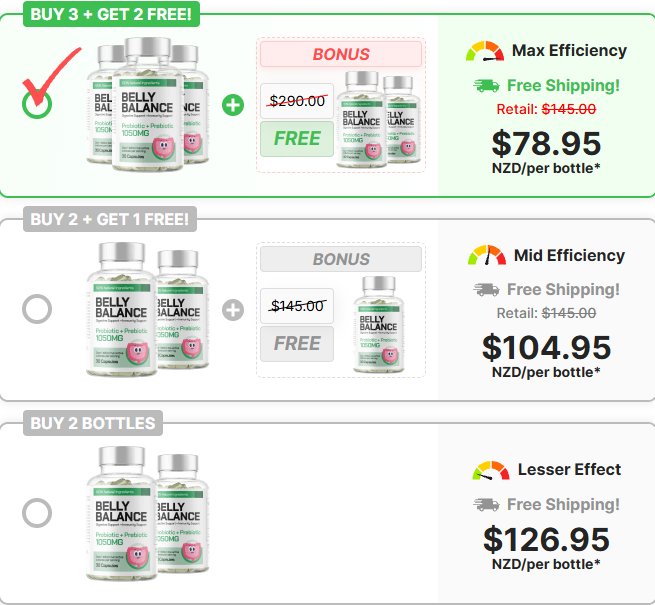
The best starting point is to check the seller’s product page and confirm that it matches the Belly Balance formula discussed in this review. Some online listings use similar product names but may contain different ingredients or formulations. blastfitness.com+2
Before purchasing Belly Balance, consider these points:
- Check product authenticity: Confirm the manufacturer and packaging details.
- Review ingredients: Make sure the Supplement Facts label matches the formula you are researching.
- Compare prices: Check the total cost, shipping charges, and available package sizes.
- Read the refund policy: Understand the return period and refund conditions.
- Check customer support: Look for valid contact information and order assistance.
Final Verdict: Is Belly Balance Worth It?
So, does Belly Balance really work for gut health? Here is my balanced take.
The concept is sound. Probiotics and prebiotics are well-researched categories, and some people do feel better using them. The common ingredients, such as Lactobacillus acidophilus and inulin, have legitimate science behind them in general. But this specific capsule does not appear to have its own published human trials, the ingredient lists vary by source, the inulin dose looks small, and many positive reviews come from sales pages.
I would call it “plausible but unproven.” It might help with mild symptoms if you are patient and realistic. It is not a cure, a weight-loss shortcut or a replacement for a good diet and medical care. If you are in the US, buy only from a seller you can verify, test it for four weeks with a symptom log, and talk to your doctor if anything feels wrong.
Frequently Asked Questions
1. Does Belly Balance really work?
It may help some people with mild bloating or irregular digestion because it combines probiotics and prebiotic fiber. However, there is no published clinical trial on the branded product, so results
2. What is in the Belly Balance supplement?
Most sources list Lactobacillus acidophilus, Streptococcus salivarius and inulin. Some list other strains or herbs. Always read the label of the exact product you buy.
3. Is Belly Balance good for gut health?
The ingredient types are linked to gut health in general. Whether this exact formula improves your gut depends on dose, strain survival, your diet and your own body.
4. How long does it take to work?
Probiotics usually need a few weeks of daily use. Many people judge results after about four weeks. Do not expect overnight changes.
5. Are there side effects?
Some people report mild gas, bloating or nausea at first. Be cautious if you have a health condition or a weakened immune system. Promotional claims of “no side effects” should not be trusted
6. Can it help with weight loss?
Some pages claim so, but the evidence is weak. Gut health may play a role in weight, but a probiotic capsule is not a proven weight-loss tool.
7. Is it available in the USA?
It is mostly promoted in Australia and New Zealand. US buyers should confirm shipping, returns and seller authenticity before ordering.
8. Is it FDA approved?
No. Dietary supplements are not approved by the FDA before sale. The FDA regulates them under a different framework from drugs.
9. Is it safe with medication?
Probiotics are usually well tolerated by healthy adults, but ask your doctor or pharmacist, especially if you take immuno suppressive drugs or have a chronic illness.
10. What are good alternatives?
Eat more fiber, add fermented foods, drink water, sleep well, manage stress and consider a probiotic with clearly labeled strains and third-party testing.
Disclaimer
This article is for general information only and is not medical advice. It does not diagnose, treat or prevent any condition. Speak with a qualified healthcare provider before starting any supplement, especially if you have a medical condition, are pregnant or take medication.
References and Scientific Resource Sites
Product pages and reviews referenced (for context, not endorsement):
- Product listing, The Bright Side Clinic: https://thebrightsideclinic.com.au/product/belly-balance/
- Product listing, Invitation to Health: https://www.invitationtohealth.com.au/product/belly-balance/
- Reviews Australia, Wellbeing Magazine: https://wellbeingmagazine.com/belly-balance-reviews-australia-is-this-probiotic-worth-it-honest-2026-analysis/
- NZ review, Health News Place: https://healthnewsplace.com/belly-balance-nz
For more expert-backed health tips, wellness guides, and supplement insights, be sure to read more articles on the Health Review Hub