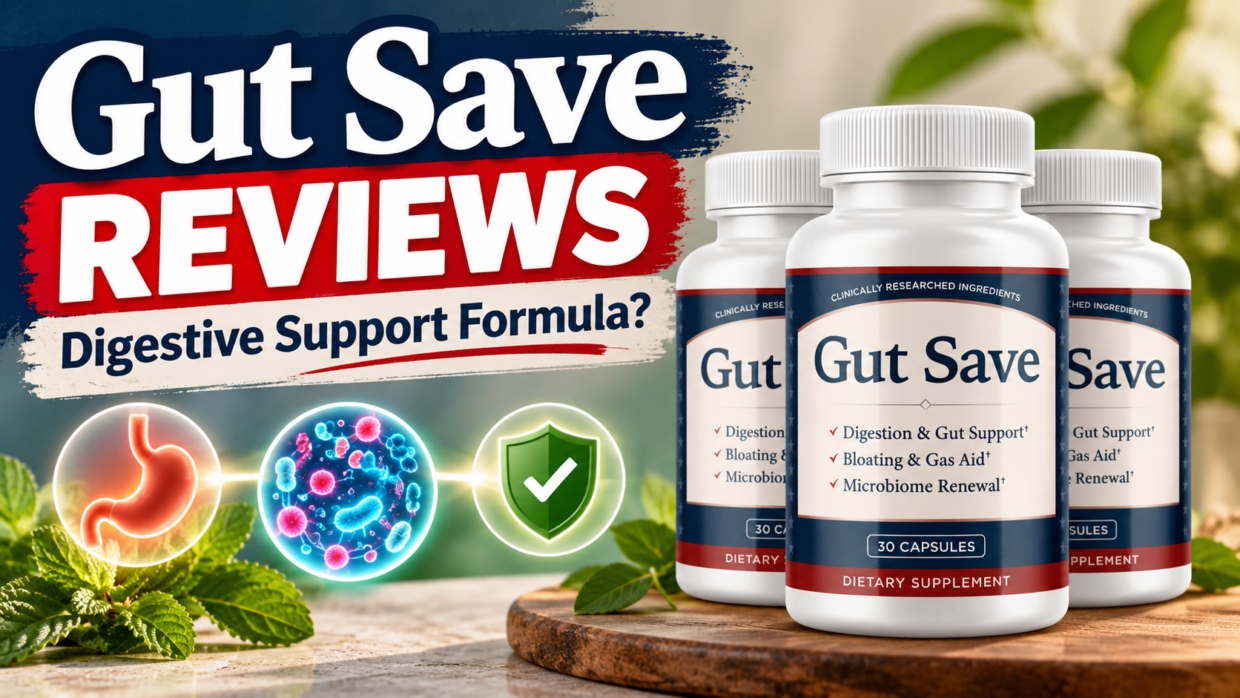
Digestive health plays an important role in everyday comfort and overall wellness. Issues such as bloating, gas, irregular bowel movements, and digestive discomfort can affect daily routines and quality of life. As a result, many people are exploring dietary supplements that claim to support digestion and maintain a healthy gut microbiome.
Gut Save is a dietary supplement marketed for digestion and gut support. According to its promotional information, the formula is designed to support digestive comfort, help with bloating and gas, and promote a balanced gut environment. It comes in capsule form and is intended to complement a healthy lifestyle.
In this Gut Save Reviews article, we take a closer look at the product’s advertised benefits, ingredients, potential side effects, customer feedback, pricing considerations, and scientific evidence. The goal is to help readers understand what Gut Save offers and what they should consider before purchasing it.
But is Gut Save really a clinically proven digestive support formula, or are its claims stronger than the available evidence? Let’s explore its ingredients, safety considerations, and potential value to help you make an informed decision.
What Is Gut Save?
Gut Save is marketed as a daily digestive wellness supplement. According to its official website and several third-party listings, it is a single capsule taken once a day, usually before breakfast, and it is aimed at adults who deal with occasional bloating, irregular bowel movements and general digestive discomfort.
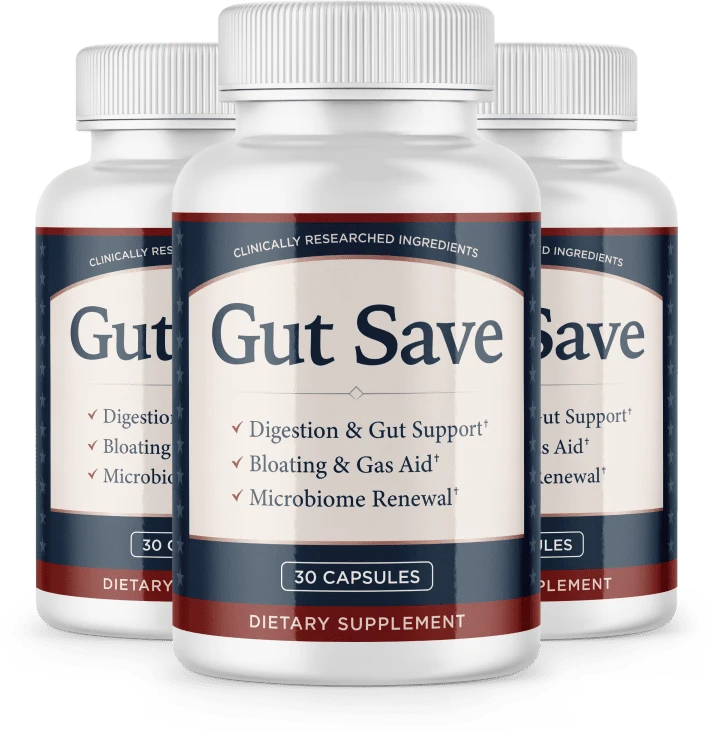
What makes it different from a basic probiotic is the “stacked” approach. Instead of relying on bacteria alone, the formula adds ingredients that are traditionally linked to the gut lining (collagen and colostrum), botanicals associated with digestive comfort (papaya seed, black cumin) and a functional mushroom (lion’s mane). The brand’s pitch is essentially ‘calm the gut’, ‘support the lining’, and ‘then repopulate with beneficial bacteria’.

Gut Save Ingredients: What’s Actually Inside
Here is where things get a little messy, and it’s worth slowing down.
The official Gut Save site lists these main ingredients: fish collagen peptides, organic lion’s mane powder, papaya seed powder, black cumin seed extract, colostrum powder and five probiotic strains. It specifically highlights Lactobacillus paracasei among the strains, and one brand page names Bifidobacterium lactis BL-04.
However, not every page describing “Gut Save” or “GutSave” agrees. One independent reviewer’s ingredient table lists fish collagen peptides at 300 mg, plus Ceylon cinnamon, Irish sea moss, papaya seed, black cumin seed extract, colostrum and six probiotic strains, with no lion’s mane at all. Other pages describe digestive enzymes, prebiotics and fibre, which don’t appear on the official ingredient list.
Why does this matter? Because there appear to be many websites, landing pages and affiliate pages using the Gut Save name, and they don’t describe the same formula. Some of these pages are clearly copy-and-paste marketing. That is a red flag for consumers, and it is the main reason I recommend one simple step before buying.
Ingredient summary (based on the official site)
| Ingredient | Marketed role | Notes |
|---|---|---|
| Fish collagen peptides | Gut lining and connective tissue support | Source of amino acids such as glycine and proline; fish allergen |
| Colostrum powder | Gut barrier support | Typically bovine (milk-derived); not suitable for milk allergy |
| Organic lion’s mane powder | Gut and nerve support | Functional mushroom; most research is not gut-specific |
| Black cumin seed extract | Soothing, anti-inflammatory support | Nigella sativa; may interact with some medicines |
| Papaya seed powder | Traditional digestive comfort | Limited modern human data |
| Five-strain probiotic blend | Microbiome balance | Strain names and CFUs matter; check the label |
What Does the Science Say About Each Ingredient?
This is the heart of any honest supplement review. A product is only as good as the evidence behind its ingredients, at the doses actually used.
1. Probiotics

Probiotics are the most studied part of the formula, but the research is more nuanced than advertising suggests. Effects are strain-specific and condition-specific. A strain that helps with antibiotic-associated diarrhea may do nothing for constipation. Authoritative bodies such as the U.S. National Center for Complementary and Integrative Health (NCCIH) note that evidence for probiotics is promising for some conditions but inconsistent for many others, and the American Gastroenterological Association has taken a cautious position, suggesting probiotics for specific situations rather than as a blanket recommendation for digestive complaints.
For Gut Save, the key unknowns are the exact strains, the CFU (colony-forming units) count at expiry and whether the strains have been tested at that dose for the specific benefits claimed. A “five-strain blend” sounds impressive, but without strain-level detail, it tells you very little.
2. Colostrum
Bovine colostrum is the most intriguing ingredient here, and several reviewers single it out for good reason. Small human studies, many of them in athletes, have suggested that colostrum may reduce markers of increased intestinal permeability after intense exercise. There is also research in specific clinical settings. But these studies often use daily doses measured in grams, while one third-party listing for Gut Save shows colostrum at just 15 mg. That is a tiny fraction of typical research doses, so benefits seen in studies cannot simply be assumed to apply.
3. Collagen peptides
Collagen peptides have decent evidence for skin and joint outcomes. For the gut specifically, the claim that collagen “repairs the gut lining” rests largely on lab and animal findings and on the plausible role of amino acids like glycine and glutamine. Direct, high-quality human trials showing that oral collagen peptides heal the intestinal lining in people with digestive complaints are limited.
4. Lion’s mane
Lion’s mane is popular, and there is genuine research interest, mostly around cognition and nerve growth factor, with some animal studies on gut inflammation. Human evidence for digestive benefits is thin. It is a fair “supporting actor”, but I wouldn’t rely on it for bloating relief.
5. Black cumin seed (Nigella sativa)
Black cumin has a long history in traditional medicine and a growing body of small clinical studies, including some on metabolic and inflammatory markers. For digestion, results are mixed and trials are generally small. It can also interact with certain medications, such as those affecting blood sugar or blood pressure, so it’s one to mention to your pharmacist.
6. Papaya seed
Papaya seed has traditional use in digestive and antiparasitic remedies, but robust human trials are scarce. Most of the marketing around it relies on tradition rather than modern clinical evidence.
Is Gut Save “Clinically Proven”?
Short answer: I could not find evidence that it is.
Here is how I’d break down the phrase:
- “Clinically proven” normally means the finished product, or at least the exact formula, has been tested in a controlled human trial with measurable results, ideally published in a peer-reviewed journal.
- “Clinically researched ingredients” (wording that appears on several Gut Save pages) means that individual ingredients have been studied, sometimes at different doses and in different populations.
These are very different claims. One independent review put it plainly: research on individual ingredients does not prove that Gut Save itself produces the same results, and no published finished-product clinical trial was identified.
My own search turned up the same result. I found manufacturer marketing, affiliate-style review pages and ingredient-level science, but no peer-reviewed, placebo-controlled trial of Gut Save as a finished product. If you come across one, I’d genuinely like to know, and I’d update this article.
Some pages also describe the product as “GMP certified” and made in an FDA-registered facility. That is worth something, but it’s worth understanding what it means. In the United States, the FDA does not approve dietary supplements for safety or effectiveness before they’re sold. “FDA registered facility” means the factory is registered, not that the product has been evaluated or approved. Good Manufacturing Practice (GMP) compliance speaks to manufacturing consistency and quality control, not to whether the product works.
What Customers and Reviewers Say
Online feedback about Gut Save falls into three buckets.

1. Enthusiastic testimonials on brand pages. The official site displays a perfect 5.0 average from more than 26,000 reviews, with testimonials about regular bowel movements and feeling more comfortable. Perfect scores are rare in real-world product reviews, and brand-controlled review sections naturally highlight the best experiences. I’d treat them as marketing, not as independent data.
2. Affiliate-style review sites. Many pages ranking for “Gut Save reviews” are positive, sometimes glowingly so, and some give near-perfect ratings. Pay attention to whether a site discloses affiliate relationships, whether it shows the actual label, and whether it mentions any downsides. One reviewer reported less bloating by week three and better regularity by week five over 90 days, which is plausible for a probiotic-containing product but is a single anecdote, not evidence.
3. More cautious analysis. A smaller number of reviewers emphasize the lack of finished-product trials, allergen concerns and the difference between ingredient research and product proof. These tend to be the most useful reads.
What the pattern tells us: Gut Save is not drawing widespread, well-documented safety complaints in the sources I reviewed, but the “reviews” ecosystem is dominated by promotional content, so absence of complaints isn’t proof of safety or effectiveness. Reading verified purchaser reviews on a retailer or independent platform, and checking refund policies, is more informative than any rating on a brand page.
Also worth noting: with a product like this, results are subjective. Bloating, regularity and “feeling lighter” are influenced by diet, stress, sleep, hydration, hormones and the placebo effect. Even in real clinical research on gut supplements, placebo response rates in digestive complaints are notably high, which is exactly why controlled trials matter.
Gut Save Side Effects and Who Should Avoid It
Most people tolerate probiotic-containing supplements well, but side effects and safety issues are real.
Possible mild side effects:
- Temporary gas, bloating or loose stools during the first days or weeks as your gut adjusts (common with probiotics)
- Stomach discomfort or changes in bowel habits
- Rare allergic reactions
Allergen alerts (important):
- Fish: the formula uses fish collagen peptides. Avoid it if you have a fish or shellfish allergy unless your allergist clears it.
- Milk: colostrum is typically bovine and milk-derived. It’s not appropriate for people with a milk protein allergy, and people with lactose intolerance should check the label.
Check with a healthcare professional first if you:
- Are pregnant, breastfeeding or trying to conceive
- Have a weakened immune system, are on chemotherapy or immunosuppressants, have a central venous catheter, or are critically ill (probiotics carry rare infection risks in these groups)
- Take prescription medication, especially for diabetes, blood pressure or blood clotting (black cumin may interact)
- Have a diagnosed digestive condition such as IBD (Crohn’s disease, ulcerative colitis), celiac disease or severe IBS
- Are preparing for surgery
- Are giving it to a child or teen (it’s marketed as an adult supplement)
See a doctor promptly, and don’t self-treat with supplements, if you have: blood in your stool, black or tarry stools, unexplained weight loss, persistent vomiting, severe or worsening abdominal pain, difficulty swallowing, fever with digestive symptoms, anemia, or a new change in bowel habits after age 45. These can signal conditions that need proper diagnosis.
Gut Save Price, Guarantee and Where to Buy
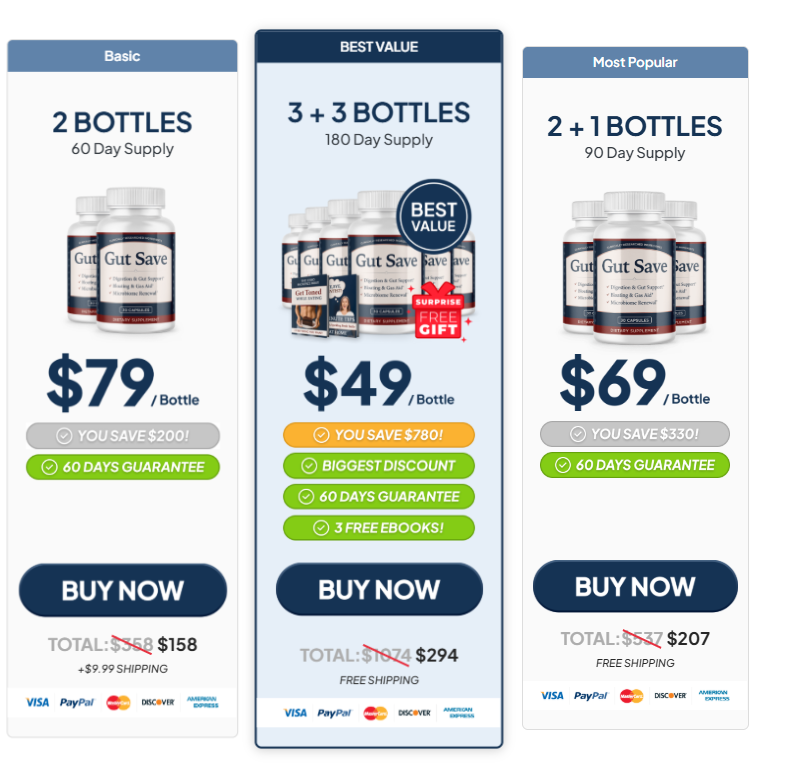
Several sources mention a 60-day money-back guarantee. Before buying:
- Confirm the guarantee terms on the official checkout page, not on a review site.
- Check the return process, whether opened bottles qualify and who pays for shipping.
- Beware of auto-ship or subscription enrollment hidden in checkout.
- Because lookalike domains and landing pages exist, make sure you are on the manufacturer’s actual site, and consider paying by a method that offers dispute protection.
- Keep your order confirmation and screenshots of the offer and guarantee.

A fair price for a daily multi-ingredient gut supplement is generally a matter of what the label actually delivers per capsule. Compare cost per month and cost per active dose, not only the bottle price.
Gut Save vs. Other Gut Supplements
| Factor | Gut Save | Standard probiotic | Fiber/prebiotic supplement | Digestive enzymes |
|---|---|---|---|---|
| Approach | Multi-ingredient “stack” | Bacteria only | Feeds existing gut bacteria | Helps break down food |
| Evidence base | Ingredient-level only | Strain-specific trials exist | Good evidence for regularity (e.g., psyllium) | Evidence for specific conditions only |
| Allergen concerns | Fish, milk | Varies | Usually low | Varies |
| Cost | Mid to high | Low to mid | Low | Low to mid |
| Best for | Those wanting an all-in-one capsule | Targeted strain use | Constipation, general regularity | Specific enzyme deficiencies |
A useful reality check: for plain constipation, fiber (especially psyllium) and adequate fluids have stronger evidence than most multi-ingredient capsules. For bloating from specific foods, an elimination approach supervised by a dietitian, such as a structured low-FODMAP trial, often tells you more than any supplement can.
Who Might Benefit, and Who Should Skip It
Gut Save may be worth a cautious trial if you:
- Are a generally healthy adult with mild, occasional digestive discomfort
- Have already ruled out serious causes with your doctor
- Like the idea of an all-in-one daily capsule and have no relevant allergies
- Will give it a fair, time-limited trial (for example 4 to 8 weeks) and track your symptoms honestly
You may want to skip it, or talk to a professional first, if you:
- Have fish or milk allergies
- Are immunocompromised, pregnant or on multiple medications
- Have persistent or severe symptoms that haven’t been evaluated
- Expect it to cure a diagnosed condition such as “leaky gut,” IBS or IBD (supplements don’t cure disease, and “leaky gut” as a stand-alone diagnosis remains contested in mainstream medicine)
A simple way to test any gut supplement fairly: keep a symptom diary for two weeks before starting, change only one thing at a time, and rate bloating, stool consistency and discomfort weekly. If nothing improves after the trial period, stop. Paying for months of a product that isn’t helping is rarely worth it.
Smarter Habits That Matter More Than Any Capsule
If you take only one thing from this article, let it be this: the basics usually move the needle more than supplements do.
- Eat more fiber gradually. Vegetables, legumes, oats, fruit and whole grains feed beneficial bacteria. Increase slowly to limit gas.
- Drink enough water, especially when raising fiber intake.
- Include fermented foods such as yogurt, kefir, kimchi or sauerkraut if you tolerate them.
- Move daily. Even brisk walking supports regular bowel movements.
- Manage stress and sleep. The gut and brain are closely connected, and poor sleep and chronic stress commonly worsen digestive symptoms.
- Limit ultra-processed foods, excess alcohol and smoking.
- Don’t ignore symptoms. Persistent changes deserve a medical evaluation.
Final Verdict: Is Gut Save Worth It?
Gut Save is a thoughtfully assembled formula with recognizable ingredients, and nothing in its published ingredient list is obviously dangerous for healthy adults without allergies. The inclusion of colostrum, collagen, a probiotic blend and a few botanicals reflects current popular interest in gut barrier and microbiome support.
But the honest scorecard looks like this:
| Category | Assessment |
|---|---|
| Ingredient quality (as marketed) | Reasonable, with some research interest |
| Evidence for the finished product | None found |
| “Clinically proven” claim | Not substantiated |
| Transparency | Mixed; conflicting ingredient lists across sites, dose details unclear |
| Safety for healthy adults | Likely fine for most, with allergen and medication caveats |
| Price and value | Variable; verify real pricing and refund terms |
| Overall | A plausible, unproven option, not a miracle fix |
If you decide to try it, buy from the official source, read the Supplement Facts panel, check for allergens, set a time limit, and keep your doctor in the loop. If your symptoms are persistent or concerning, a medical evaluation is a better use of your money than any supplement.
Frequently Asked Questions
What is Gut Save?
Gut Save is a once-daily dietary supplement marketed for digestive comfort, bowel regularity and gut balance. According to the official site, it contains fish collagen peptides, lion’s mane, papaya seed powder, black cumin seed extract, colostrum and a five-strain probiotic blend.
Is Gut Save clinically proven?
No finished-product clinical trial of Gut Save was found in the sources reviewed. Some individual ingredients have been studied, but ingredient-level research doesn’t prove that this specific product works.
Does Gut Save really work?
Some people report improvements in bloating and regularity, but those are individual experiences, not controlled evidence. Results vary and can be influenced by diet, lifestyle and the placebo effect.
Is Gut Save a scam?
Gut Save appears to be a real, commercially sold dietary supplement, not a fake product. However, concerns include unproven “clinically proven” marketing, inconsistent ingredient details across websites, inflated “regular price” comparisons and a large number of promotional affiliate pages. Buy only from the official site and read the refund terms.
What are the side effects of Gut Save?
Possible effects include temporary gas, bloating or stomach upset, especially at first. Fish and milk allergens are the main safety concern. Serious reactions are uncommon but possible.
How long does Gut Save take to work?
Marketing and some reviewers suggest changes within a few weeks, but there is no clinical data on timing for this product. If you try it, a 4 to 8 week trial with a symptom diary is reasonable.
Can I take Gut Save with medication?
Ask your pharmacist or doctor first. Black cumin and other botanicals may interact with certain medications, and probiotics need extra caution in people with weakened immune systems.
Is Gut Save vegan?
No. It contains fish collagen and colostrum (typically milk-derived), so it isn’t vegan, although some third-party pages describe it as suitable for vegetarians and vegans. Always check the official label, because those descriptions conflict with the listed ingredients.
Does the FDA approve Gut Save?
No. The FDA does not approve dietary supplements before they’re sold. Supplements are regulated differently from drugs, and manufacturers are responsible for product safety and truthful labeling.
References and Further Reading
Use these independent, authoritative sources to verify claims and learn more about gut health and supplements:
- NIH Office of Dietary Supplements: https://ods.od.nih.gov/ (fact sheets on dietary supplements and ingredients)
- NCCIH (NIH), Probiotics: Usefulness and Safety: https://www.nccih.nih.gov/health/probiotics-usefulness-and-safety
- U.S. FDA, Dietary Supplements: https://www.fda.gov/food/dietary-supplements (how supplements are regulated, adverse event reporting)
- FTC, Health Products Compliance Guidance: https://www.ftc.gov/business-guidance/resources/health-products-compliance-guidance (how health claims should be substantiated)
- Medical guidance: American Gastroenterological Association — Clinical Guidance — professional guidance on digestive conditions and treatments.
Medical Disclaimer – This article is intended for informational and educational purposes only. Gut Save is a dietary supplement designed to support general digestive wellness. Individual results may vary. Consult a qualified healthcare professional before using any supplement, especially if you have an existing medical condition, take medication, or have food allergies.